Five practical skills every recruiter needs are:
- Marketing and sales insight
- The ability to locate top talent
- Converting passive candidates into active ones
- Interpreting and leveraging data
- Passion and drive
Together, these competencies empower your recruiting team to secure the best candidates or lose them to the competition. The pressure to build a team with the right mix of technical and soft skills is only increasing — 72% of employers worldwide are having difficulty finding skilled talent.
Talent acquisition is the foundation of every great team, because recruiters aren’t just screening applicants and scheduling interviews. You identify and connect your organization with talented professionals who best match your company's needs. Without a strong recruiting team, you won't have the top-level executives, leaders, and employees your organization depends on to succeed.
The recruiting landscape has grown increasingly competitive. Even as hiring growth cools, 73% of HR professionals say less than half of applicants meet the job requirements. There are more open roles than available candidates, and that imbalance has created a race for talent. The most skilled and driven recruiters are no longer a luxury — they’re essential.
So, does your team have what it takes to recruit, hire, and retain top talent? Ensure your recruiters have the right skills and mindset.
1. How Do Recruiters Use Marketing and Sales Skills?
Successful recruiting involves using marketing and sales skills to attract top candidates. They craft compelling employer value propositions, target the right talent segments, and present job opportunities in ways that resonate with high performers. They use social media to share opportunities, discover top candidates, and stay connected with passive talent pools.
Those skills directly influence employer brand: recent candidate experience research shows that 65% of candidates do not receive consistent communication during recruiting. That erodes trust and makes it harder for recruiters to sell roles effectively.
Modern recruiters should be well-versed in marketing and sales and understand how to win over qualified candidates. With so much competition, you need to capture the attention of top performers through effective outreach and clear messaging about why candidates should consider your company. Today's candidates have options, and if your recruiting team doesn't present your unique offers compellingly, you'll lose top talent quickly.
Ensure your recruiters know how to attract the right talent by highlighting the perks, benefits, and opportunities that matter most to each candidate segment. Skilled candidates are searching for specific keywords and terms, and your recruiters need to speak that language.
2. What Does It Take To Locate Top Talent Today?
Locating top talent today requires recruiters to go beyond traditional job postings. The strongest candidates are often already employed and not actively searching. That means that long before the hiring process begins, you need to proactively source passive talent through targeted outreach, networking, and modern sourcing tools.
LinkedIn research found that 83% of recruiting professionals say engaging passive candidates is the top skill that will grow in importance over the next five years. There are several skills recruiters can develop to support this one:
- Communication skills
- Relationship-building skills
- Organizational skills
In the past, posting a job and waiting for applicants was a viable strategy. Today, that approach leaves you with fewer high-quality candidates. The talent your organization needs isn't necessarily looking — they already have a job. It's your responsibility to find them, engage them, and make them curious about what your company has to offer.
Stepping outside of the traditional recruiting process is exactly where you can discover new talent pools and uncover hidden gems. Equally important is what happens after initial contact: follow-up skills. A common complaint from many applicants is, "They never got back to me." Consistent follow-up, regardless of whether a candidate receives an offer, signals that your company genuinely cares, and it protects your employer brand.
3. How Do Recruiters Convert Passive Candidates Into Active Ones?
Recruiters convert passive candidates into active ones by clearly articulating what makes their company a compelling next step, including culture, compensation, growth opportunities, and benefits. They also build a genuine rapport that makes the transition feel low-risk and exciting. Because the best candidates often aren’t actively looking, they tend to have stronger credentials, longer tenure, and higher performance ratings than active job seekers. That’s why so many recruiting teams are prioritizing passive candidates.
Once you have identified top passive talent, the real work begins: persuading someone who is comfortable in their current role to take a leap. This requires highlighting what your company offers that your current employer does not, including top benefits, culture perks, and career growth potential.
For candidates who are hesitant, you need to invest time in nurturing. This means covering every relevant detail and proactively addressing concerns. You also need trust and excitement to turn a passive candidate into a committed, active applicant.
Patience and persistence are just as important skills as persuasion at this stage. Excellent listening skills also come in handy to help you understand what’s most important to your passive talent.
4. Why Is Data Literacy a Critical Recruiter Skill?
Data literacy is a critical recruiter skill because it enables talent teams to identify sourcing gaps, track the health of the candidate pipeline, and make evidence-based hiring decisions. That ultimately improves both the speed and quality of hires.
Does your team have access to recruiting tools that help them collect, interpret, and leverage data to refine their strategy? If not, this is a gap worth addressing. With a unified talent platform, you can build data-based talent pools, track recruiting performance, and make more confident, data-backed decisions.
With the right applicant tracking system (ATS) supporting your team, you can source passive candidates more efficiently, reach a broader talent pool, and ensure your hiring decisions align with long-term retention goals. Data doesn't replace recruiter instinct. It enhances it.
Armed with the right insights, you can revamp sourcing strategies, personalize candidate outreach, and continuously improve results.
If your recruiters aren’t marketers, analysts, and relationship-builders, you’re already behind 📉 Master the 5 must-have recruiter skills to stay competitive 🚀5. Why Do Passion and Drive Matter in Recruiting?
Passion and drive matter in recruiting because they help recruiters stay motivated, positive, and focused in a challenging role. They make it easier to keep reaching out to candidates, even when people say no or drop out of the process. That resilience pays off in a market where difficulty filling roles is common. Recruiters are often operating in high-stakes, high-pressure conditions where motivation and grit directly affect outcomes.
There are many parallels between sales and recruiting, and one of the most important shared traits is motivation. Passion for the company and its mission makes a recruiter’s message feel real instead of scripted, which helps candidates trust what they hear. When recruiters genuinely care about the organization and the role, it shows in every conversation.
Being personable and relatable are equally essential. Strong communication skills help recruiters build trust with candidates and hiring managers, making it easier to share honest feedback, answer questions, and stay on the same page. Together, passion and clear communication are what ultimately convince top candidates to say yes.
How the Right Software Amplifies Recruiter Skills
Even the most talented recruiters perform better with the right technology behind them. A strong talent management platform amplifies your skills. The right applicant tracking system surfaces data insights, streamlines candidate communication, and enables you to focus on what you do best: building relationships and making great hires.
ClearCo's unified talent platform is built to support every stage of the recruiting lifecycle, from sourcing passive candidates to delivering a standout candidate experience that strengthens your employer brand.
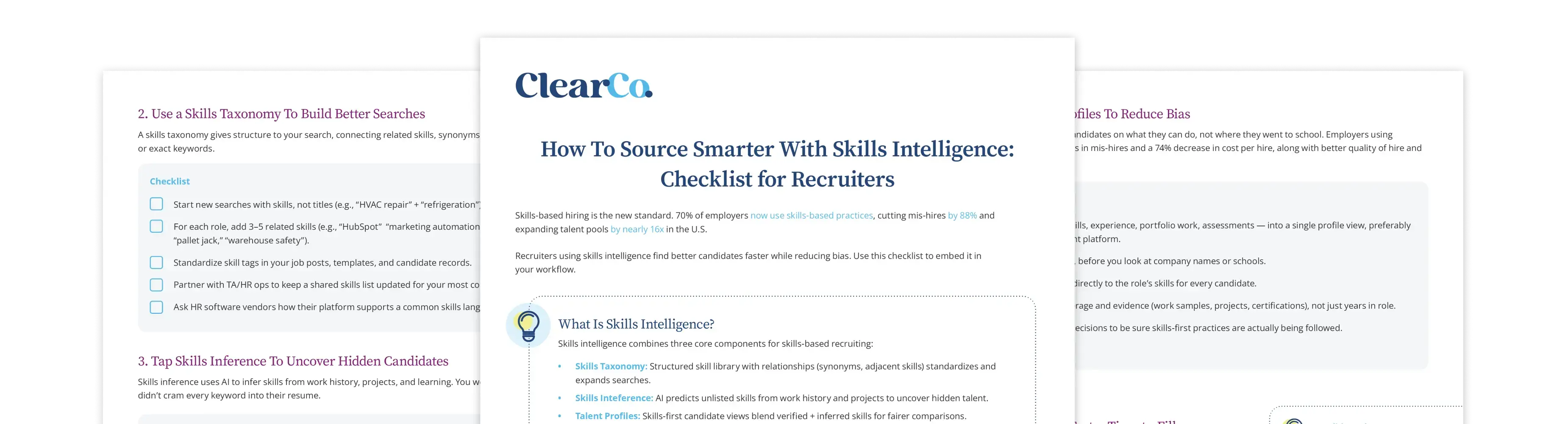
If you’re ready to put these skills into practice and sharpen how you source and engage top talent, download our free Checklist: How To Source Smarter With Skills Intelligence.
Frequently Asked Questions
Q: What is the most important skill for a recruiter in a competitive talent market?
A: In a competitive talent market, the ability to locate and convert passive candidates is arguably the most critical recruiter skill. Because top candidates are often already employed, you need to proactively source, engage, and nurture talent rather than waiting for applications.
Q: How can recruiters use data to improve hiring outcomes?
A: You can use data from an applicant tracking system to identify which sourcing channels yield the highest-quality candidates, track time-to-fill and drop-off rates, and refine outreach strategies based on what is and isn't working. Data-driven recruiting reduces reliance on guesswork and improves both hiring speed and candidate quality.
Q: How does employer branding relate to recruiter skills?
A: Employer branding is closely tied to marketing and sales skills in recruiting. Recruiters who understand how to position and communicate a company's culture, benefits, and growth opportunities will attract stronger candidates — and a positive candidate experience, including consistent follow-up, directly reinforces that brand reputation over time.
.webp)